Ahwatukee





The ABCDEs of Melanoma
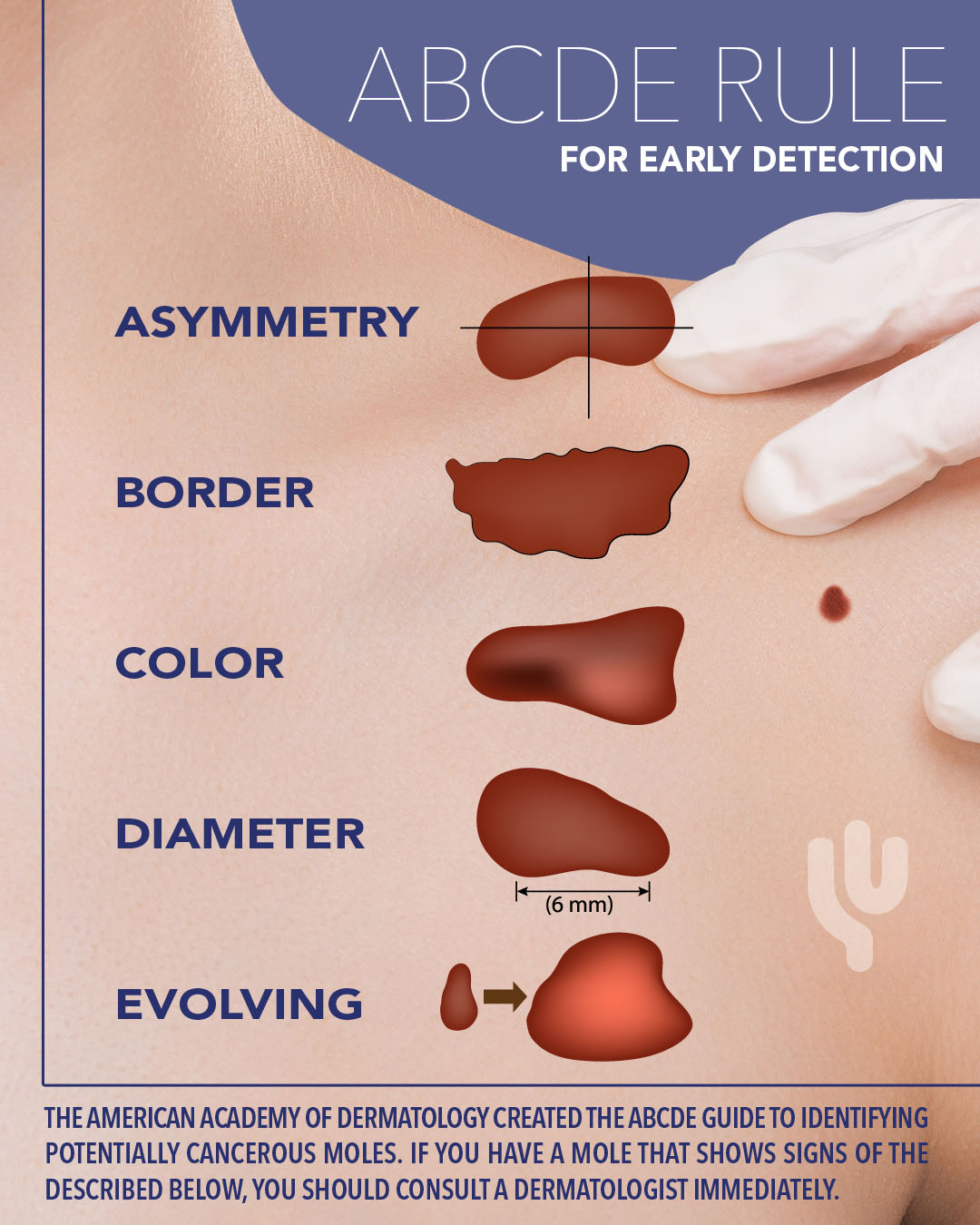
ABCDE Rule
The ABCDE Guide is suggested by the American Academy of Dermatology to help individuals identify potentially cancerous moles. If you have a mole that shows the following signs described below, you should consult a dermatologist immediately.
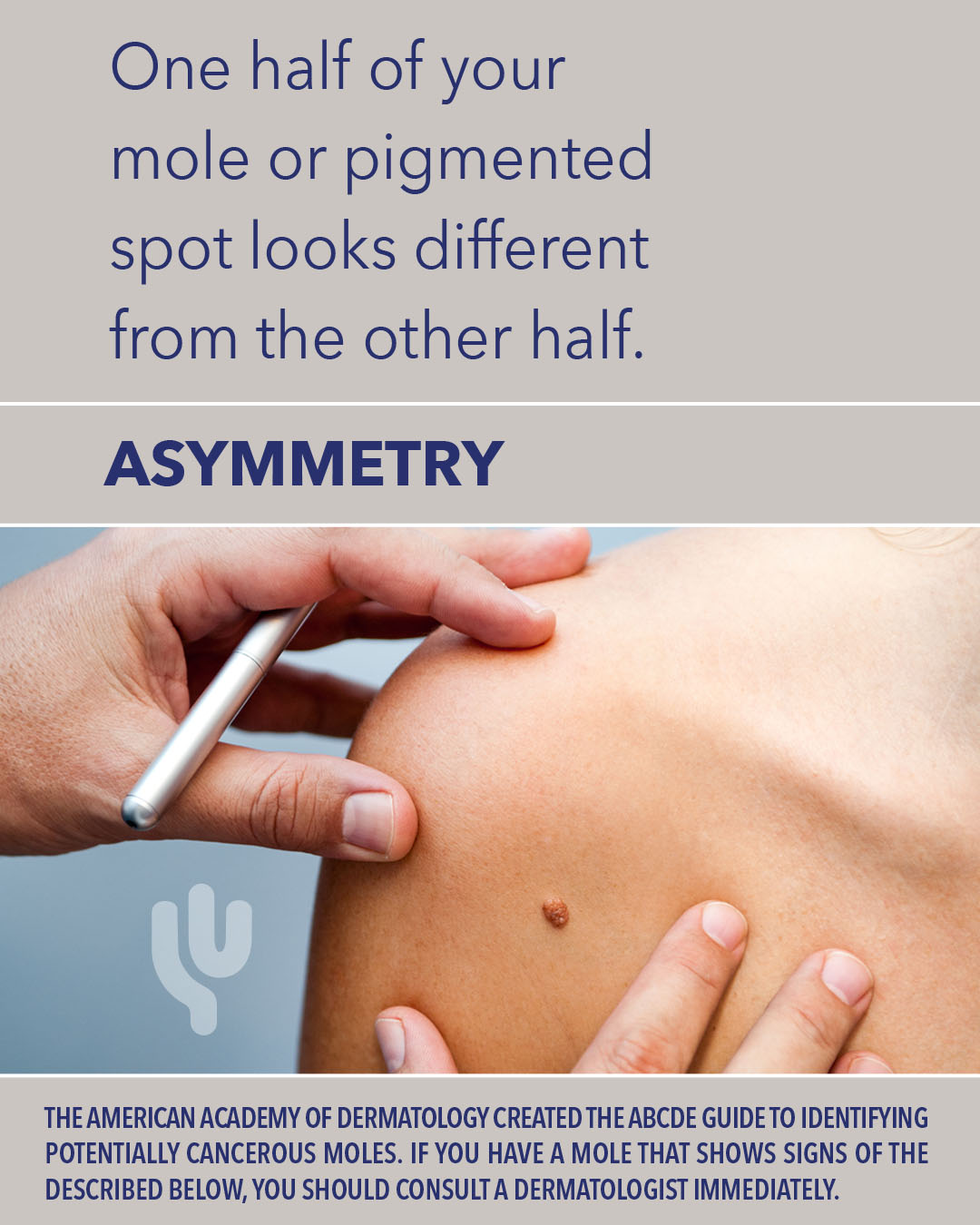
Asymmetry
If one half of your mole or pigmented spot looks different from the other half or if it has changed to look different, this could potentially be a sign of a melanoma.
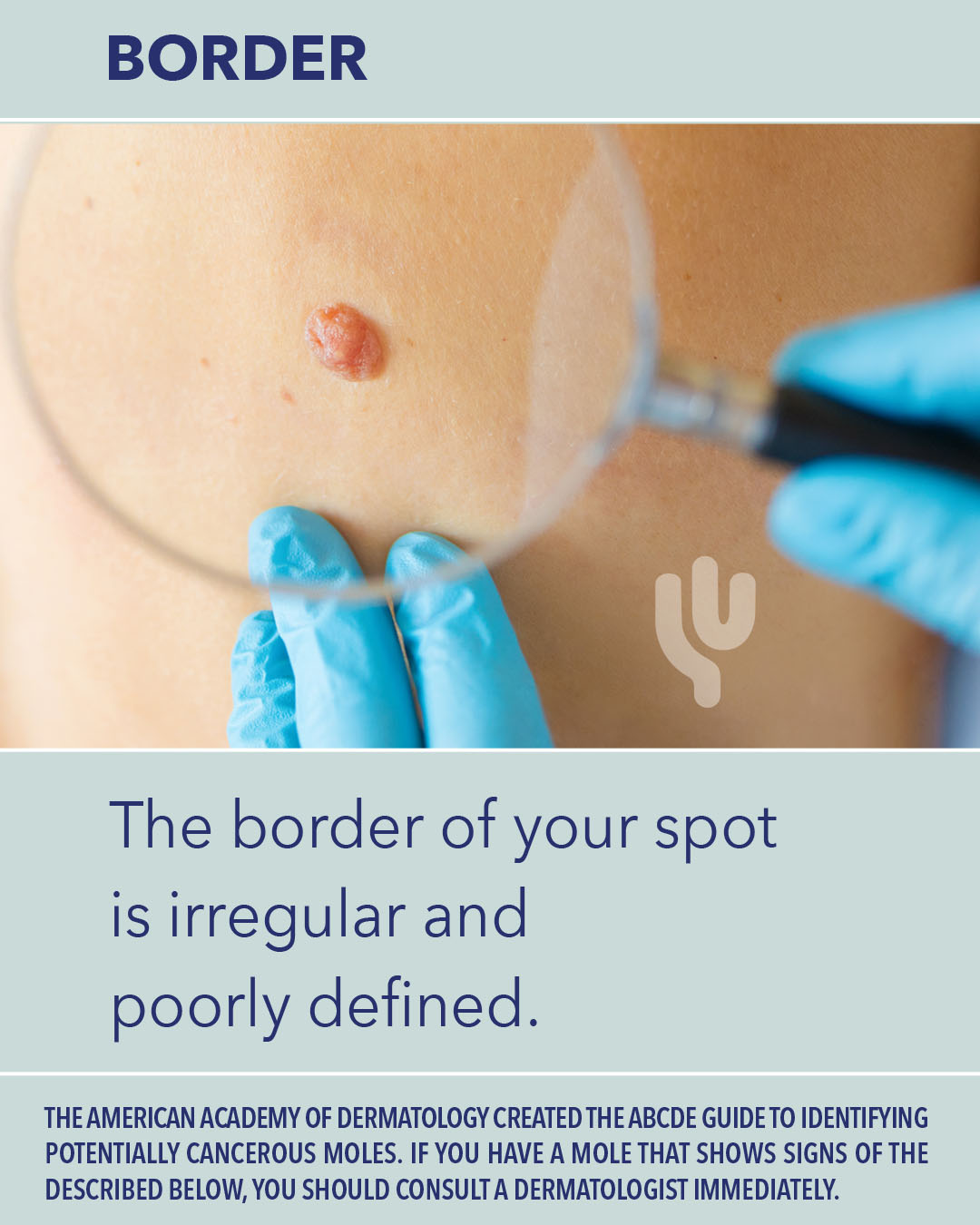
Border
If the border of your mole or pigmented spot is irregular or poorly defined – think wavy, ragged, notched, or blurred, this could be a potential sign of melanoma.
Color
If the color of your mole or pigmented spot varies from one area to the next, this could be a sign of melanoma. A mottled appearance, shades of tan, brown, black, or even white, red and blue may occur.

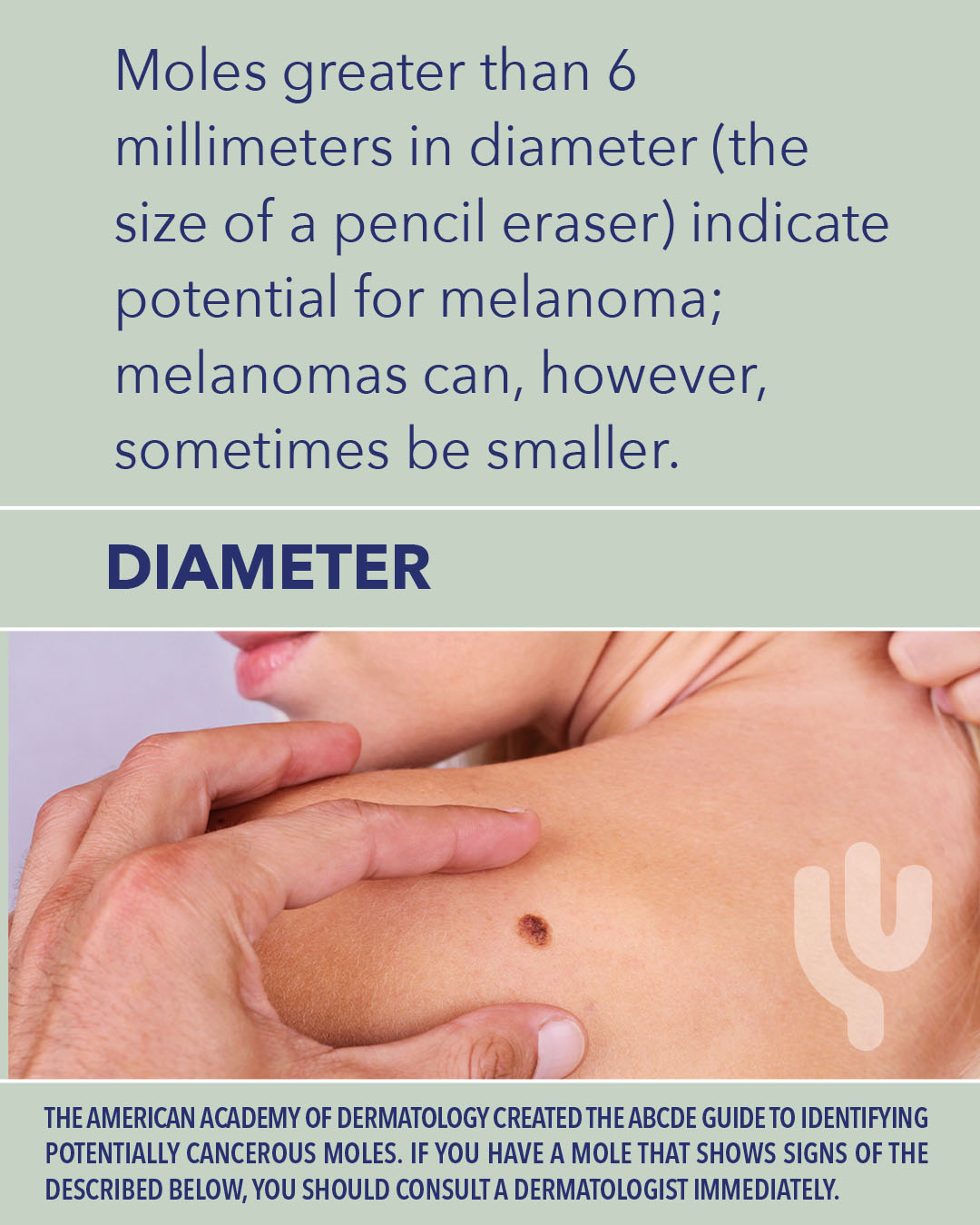
Diameter
Moles or spots greater the 6 millimeters in diameter, which is about the size of a pencil eraser, can indicate the potential for melanoma. However, if your spot is smaller, it can still be a melanoma, especially if it has one of the other signs mentioned.
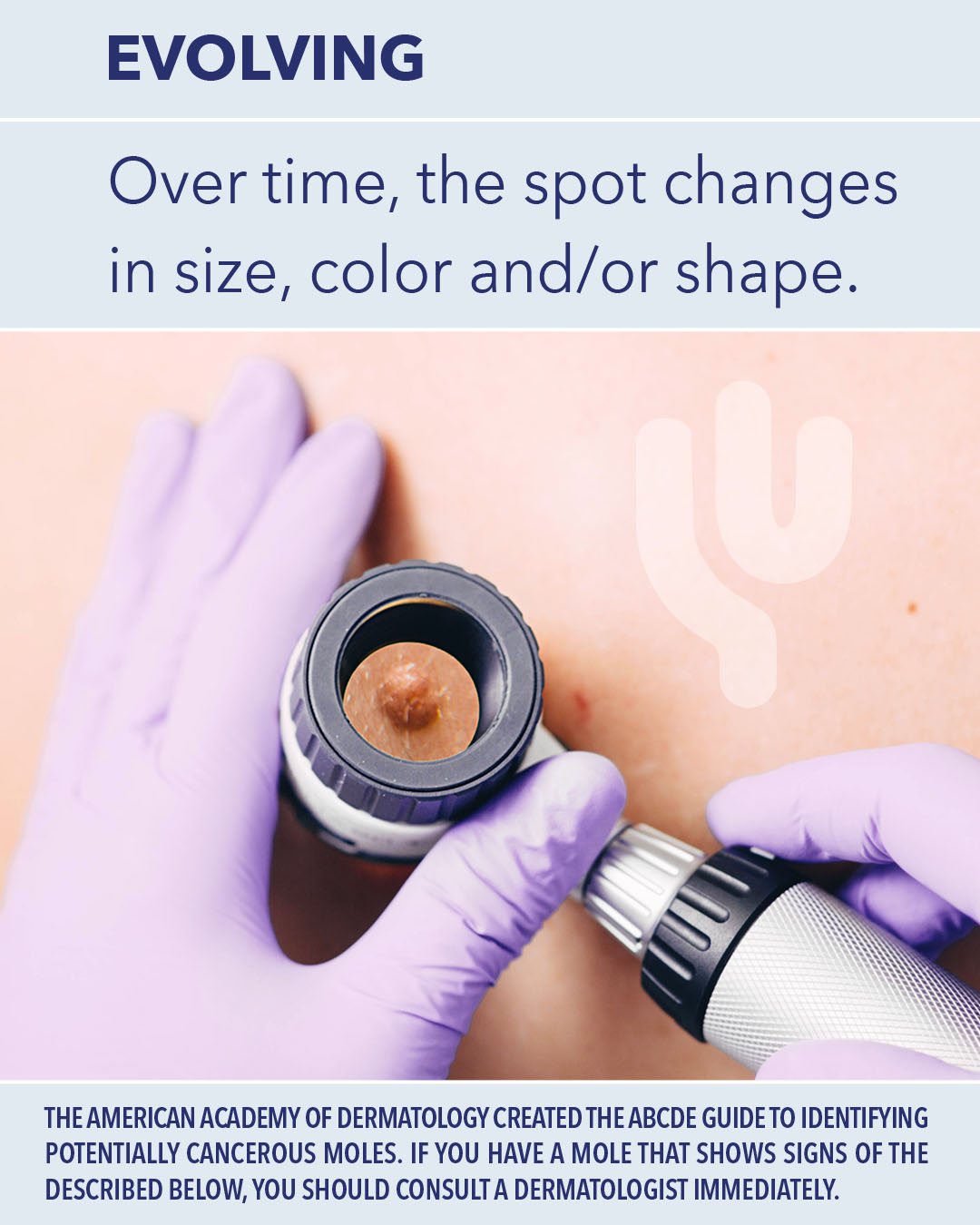
Evolving
If your mole or spot changes over time in size, color, or shape, this could be a sign of melanoma.
The good news
Most moles and spots do not need to be treated or removed. However, you may consider having a mole removed in the following cases: if it rubs against clothing or is otherwise bothersome, if there is a possibility the mole might be cancerous, or for cosmetic reasons. In any case—and despite advice you might find on the Internet—you should never attempt to remove a mole at home. It is best to let a dermatologist determine what kind of mole it is during a skin screening—and, indeed, if it is a mole and not some other kind of skin growth or melanoma—and advise you on the best course of action.
Saguaro Dermatology Reviews

Itaro Elaisa
“I totally recommend this place to anyone who’s looking for a dermatologist who’s professional, informative, respectful and very helpful. They are quick to solve your problems and get you home.”


Wendy L.
I had an awesome experience with Dr Hamann and staff. I was very comfortable and i was able to have all my questions answered without feeling rushed. The staff was courteous and welcoming.

Kristin U
“Dr Dathan and the team were very helpful, kind and knowledgeable. Plus, there was no wait time so I was able to get back to work faster than expected. I would highly recommend.”

Robert P.
Staff was friendly, & on time. office is super clean!! Doctor was awesome, felt like a family member taking care of me.

Sally S.
“Very friendly and professional. I had a great experience, Dr. Hamann was very good at answering my questions and concerns. I will certainly come back for another visit.”

Amanda C.
Great doctor and friendly, professional staff. The doctor spends time listening and answering questions, something rare to find anymore. The office is beautiful and very clean. I love all the artwork with saguaros.

Kylin L.
“The office was recently renovated–it is a beautiful, clean, and calm environment. I would highly recommend this practice for anyone who is looking for a general dermatologist.”

L
Dr. Hamann is very knowledgeable, nice, and professional. You can tell that he truly cares about his patients by the way he operates. He took the time to listen to all of my concerns then address them with good, well-informed answers.
About Saguaro Dermatology
Our comprehensive dermatology clinic is dedicated to providing you with the highest quality of care, innovative practices, helpful resources and state-of-the-art technology to prevent and treat a multitude of skin disorders. Led by Carsten R. Hamann, MD, PhD, Dathan Hamann, MD, FAAD, Michael McBride, DO, Millard Thaler, MD, Mohs Surgeon and Jenna Wald, MD, Mohs Surgeon, our passionate team looks forward to serving you with respect and compassion.